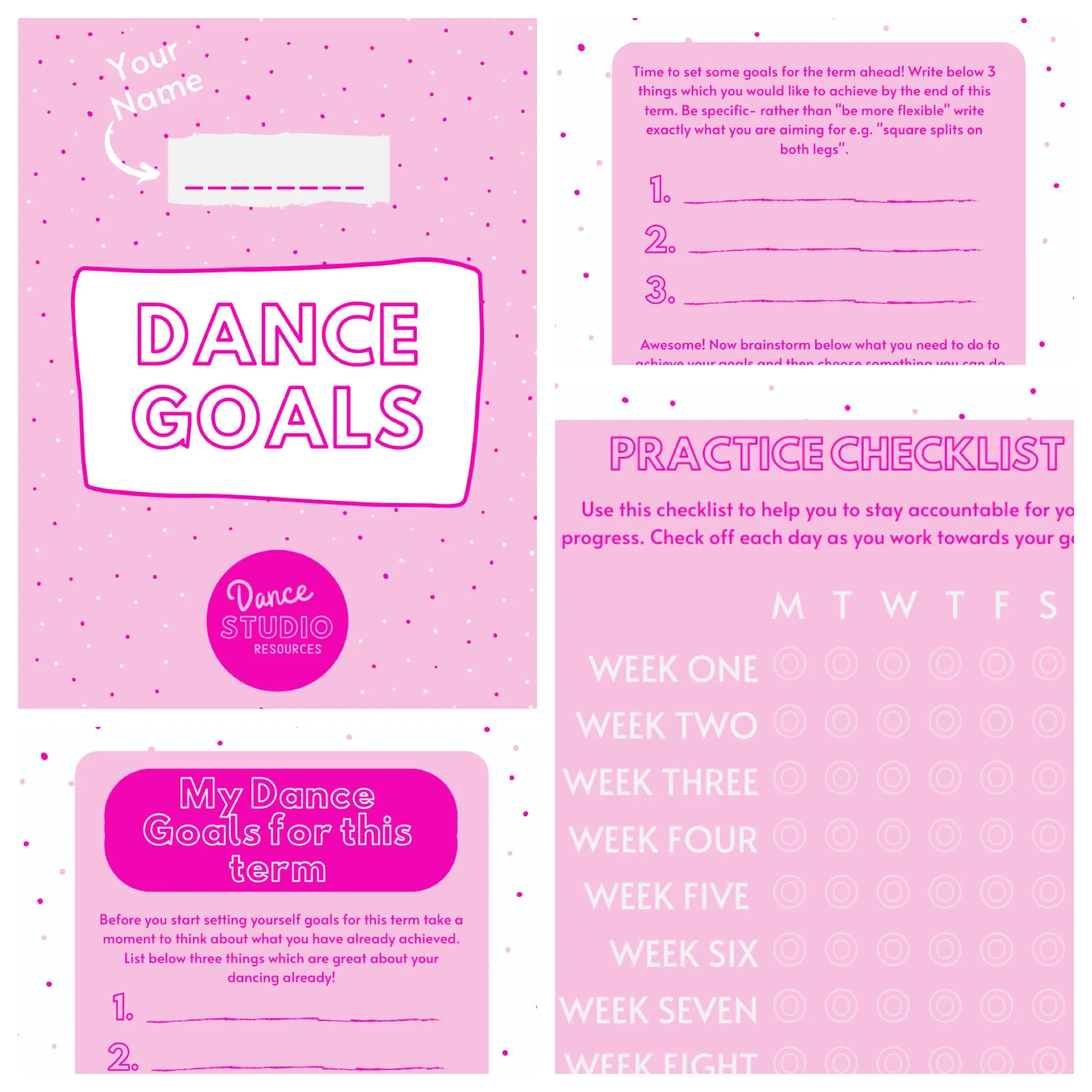

New Year, New Goals: Setting Dancer Goals That Last
A new year always brings a fresh sense of motivation—new music, new combinations, new skills to chase. At the studio, we love channeling that energy into "goal setting", especially when it’s done in a way that is clear, realistic, and sustainable for both our dancers and our environment.
This year, we’re focusing on readable goals and reusable systems that help dancers grow without burnout.
---
Why Goal Setting Matters in Dance
Dance progress doesn’t happen overnight. Strength, flexibility, confidence, and artistry are built -step by step- , just like choreography.
Setting goals helps dancers:
* Stay motivated during challenging weeks
* See progress beyond “getting the step right”
* Take ownership of their training
* Celebrate effort, not just outcomes
But not all goals are created equal—and that’s where *readability* comes in.
Making Goals Readable (and Reachable)
A good dance goal should pass the - know exactly what this means - test.
We guide our dancers to set goals that are; Clear
Instead of:
“Get better turns”
Try:
“Hold a strong passé and spot consistently for double pirouettes”
Use Specific words
Instead of:
“Be more flexible”
Try:
“Stretch hamstrings for 5 minutes after every class to improve splits”
Measurable words
Instead of:
“Work harder in class”
Try:
“Ask one question or apply one correction each class”
Readable goals allow dancers, teachers, *and parents* to all understand what success looks like.
Pushing Ourselves—Without Burning Out
Growth requires effort, but it also requires balance.
We talk with dancers about:
* Pushing through discomfort, safely
* Listening to their bodies
* Understanding that rest is part of training
* Progress over perfection
The goal isn’t to do everything—it’s to do the right things consistently.
Reusable Goal-Setting: Building Sustainable Habits ♻️
This year, we’re also being intentional about how we track goals.
Instead of one-and-done papers that get lost in backpacks, we encourage:
* Reusable goal sheets
* Whiteboard or laminated goal cards
* Ongoing check-ins instead of constant re-writing
Think of goals like a shelf:
* We don’t throw it away when we’re done
* We adjust it, add to it, and reuse it as dancers grow
This approach teaches responsibility, reflection, and sustainability—skills that extend far beyond the studio.
Goals Change—and That’s a Good Thing
As dancers grow, their goals should too.
A goal set in January might:
* Evolve by March
* Be mastered by May
* Turn into a new challenge by summer
That flexibility helps dancers learn that success isn’t about checking a box—it’s about continuous growth.